题目:Defect-Mediated Top-Down Approach for Borophene-like Formation and Its Heterostructures – From Facile Synthesis Routes towards Validation of Electroactivity in Electrochemical Water Decomposition
时间:2026年5月25日 15:30-17:00
地点:beat365 手机版官方网站 F207会议室
邀请人:周宝文 副教授(新能源动力研究所)
Biography
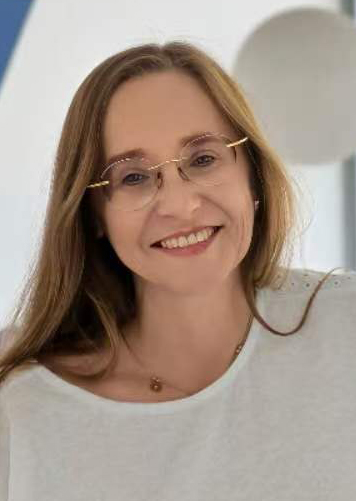
Professor Ewa Mijowska is a distinguished scientist in the field of nanotechnology, materials chemistry, and chemical engineering, currently serving as Full Professor at West Pomeranian University of Technology in Szczecin. Her research focuses on advanced nanomaterials, including graphene, borophene, metal-organic frameworks, transition metal dichalcogenides, porous carbons, and electrocatalysts for energy conversion and storage. She has made internationally recognized contributions to supercapacitors, hydrogen and oxygen evolution reactions, photocatalysis, biosensors, CO₂ capture, and biomedical nanocomposites. Her achievements have been recognized through numerous distinctions, including the Research.com Engineering and Technology Leader Award – 3rd in national ranking (2022, 2024, 2025), inclusion in the Stanford/Elsevier Top 2% Scientists ranking, the West Pomeranian Nobel Prize, and multiple Rector’s Awards for scientific excellence.
Abstract
Recent advances in boron-derived two-dimensional nanostructures have stimulated growing interest in the development of borophene-inspired materials for energy conversion applications. Although epitaxial borophene synthesized on metallic substrates represents a breakthrough in non-van der Waals 2D materials, the preparation of free-standing borophene remains highly challenging due to the absence of intrinsic layered ordering in β-rhombohedral boron (β-B). In this work, we discuss a defect-mediated top-down strategy for the formation of borophene-like nanostructures and their heterostructures starting from bulk β-B, with particular emphasis on the role of defects and local structural disorder in facilitating nanoscale cleavage and generation of ultrathin boron-rich flakes. The proposed top down synthesis routes enable scalable fabrication of few-layer boron nanoflakes and porous heterostructures which can be further integrated with transition metal compounds such as NiO or Pt. Structural evolution, defect generation, and surface oxidation processes are correlated with electrocatalytic activity using advanced physicochemical characterization. The generated defects, electron-deficient boron environments, heterointerfaces, and induced porosity create highly active catalytic centers for electrochemical water decomposition. The resulting pristine β-B derived flakes and their heterostructures exhibit enhanced charge transfer, accelerated reaction kinetics, and improved durability toward both hydrogen evolution reaction (HER) and oxygen evolution reaction (OER). The presented approach provides new insight into the realistic structural nature of top-down borophene-like systems and establishes defect engineering as a key pathway linking facile synthesis with high electrochemical performance in sustainable hydrogen production.
 学院OA系统
 jAccount登录
 ENGLISH







































 地址:上海市东川路800号beat365 手机版官方网站闵行校区beat365 手机版官方网站
 邮编:200240
 Email:sjtume@sjtu.edu.cn